As an Amazon Associate, we earn from qualifying purchases. Some links on this site are affiliate links at no extra cost to you. Our recommendations are based on thorough research and editorial judgment.


Lens Thickness Basics: Index, Prescriptions, and Edge Thickness

When we talk about lens thickness, it’s fascinating how much our prescription impacts it. Strong minus prescriptions can lead to thicker edges, while strong plus prescriptions add thickness in the center—think about 4mm differences! Using high-index lenses can lighten the load by reducing bulk. Plus, frame size and shape matter too. Smaller and round frames often disguise thickness better. Stick around, and we’ll share tips on how to pick the best lenses and frames for a stylish look!
Key Takeaways
- High-index lenses can reduce edge thickness by up to 4mm compared to standard CR-39 lenses, improving aesthetics and comfort.
- Strong prescriptions affect thickness differently; minus prescriptions accumulate thickness at the edges, while plus prescriptions are thicker in the center.
- Accurate pupillary distance (PD) measurement is crucial; a 2 mm error can lead to increased lens thickness and discomfort.
- Smaller and rounder frames help mask thickness, while deeper bridge frames can enhance aesthetic appeal for stronger prescriptions.
- Anti-reflective coatings can minimize reflections, making lenses appear thinner and clearer without sacrificing visual clarity.
Understanding Lens Thickness: What You Need to Know

You may be interested
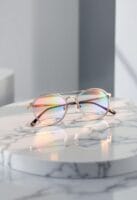

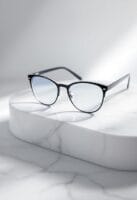
When it comes to understanding lens thickness, it can feel a bit overwhelming, especially if you’re not used to wearing glasses. But trust me, it’s easier than it sounds! For example, if you have a nearsighted prescription, opting for high-index lenses can dramatically reduce the edge thickness of your glasses—up to 4mm thinner than regular CR-39 lenses. That’s a significant difference!
Also, the size and shape of your frames can play a big role in how thick your lenses appear. Smaller, round frames tend to make thicker lenses look less bulky, while larger frames may draw more attention to them. And don’t forget about the optical center! If it’s misaligned, it can make lenses appear even thicker than they actually are.
Additionally, choosing lightweight plastic frames with flexible spring hinges can enhance comfort even if lens thickness can’t be minimized completely.
How Your Prescription Affects Lens Thickness

Have you ever thought about how your lens prescription affects lens thickness? It’s pretty fascinating! The strength of your prescription really plays a big role in how thick your lenses will be. For example, if you have a stronger minus prescription like -6.00, your lenses will tend to be thicker at the edges. In contrast, if you’re looking at a plus lens, like +6.00, that thickness accumulates in the center instead.
But here’s a little tip: using high-index materials can significantly reduce lens thickness. These materials can cut down the thickness by about 4mm compared to standard lenses, which is a nice perk if you want your glasses to look sleek. Also, did you know that where your eyes are positioned in relation to the lenses—what we call vertex distance—also affects the thickness? If your glasses aren’t centered correctly, like having a decentration of more than 2-3mm, that can lead to even thicker lenses!
Isn’t it incredible how much science is involved in something that seems so simple? Understanding these details can help you make better choices when picking out your glasses, ensuring they’re both comfortable and functional! Additionally, choosing lenses with scratch-resistant coatings can enhance their durability and longevity.
Frame Size: Impact on Lens Thickness and Aesthetics

Hey there! So, let’s chat about frame size and how it really impacts lens thickness and aesthetics. You might not realize it, but the size of your glasses frames can make a big difference in how your lenses look, especially if you have a high prescription. For instance, if you’re rocking a pair of larger frames, the edges of your lenses might end up thicker, which can definitely catch the eye. On the flip side, if you have a negative prescription, going with smaller frames can actually help slim down those edges. Isn’t that interesting?
Now, if you’re on the lookout for thinner lenses, consider options with a higher refractive index; they work wonders particularly when the lens design is more centered. Shapes matter too! Round frames often do a better job of minimizing thickness variations compared to square ones. As you shop for frames, think about your prescription strength, and you’ll strike that perfect balance between looking good and seeing well. After all, nobody wants to feel like they’re wearing oversized dinner plates on their face!
With all this in mind, once you’ve settled on a frame size, let’s explore how to choose the best lens type for your unique style and needs. Additionally, considering lightweight frame designs can enhance comfort and make prolonged wear much easier, especially for those who also use blue light glasses.
Best Frame Shapes for Thinner Lenses
Hey there! So, let’s talk about finding the best frame shapes for those thinner lenses we all want. If you’re looking to keep things sleek, smaller frames—especially in round or oval shapes—can really help reduce lens thickness. These styles not only help mask a thicker lens but also align your eyes better with the center of the lens, which can make a noticeable difference. Pretty cool, right?
Now, if you have a higher prescription, you might want to stick with full-rim styles. They offer more support and can help make those thicker lenses seem less bulky. For the best results, go for frame sizes under 52 mm if you have a negative prescription and under 50 mm for a positive one. And don’t overlook the benefit of deeper bridge frames; they can cleverly hide the thinnest part of the lens, so your glasses look stylish and functional.
How Pupillary Distance Affects Lens Thickness
Hey there! Have you ever thought about how pupillary distance, or PD, plays a role in the way your glasses look and feel? It’s super important when it comes to getting the right lens fit. Believe it or not, just a 2 mm mistake in that measurement can lead to thicker lenses and even some weird visual distortions. For instance, if someone has a narrow PD and chooses a wider frame, the lenses might need to be decentered, which can make them thicker and heavier. Every single millimeter really does matter!
Also, you should keep in mind that aligning the geometric center with the optical center of the lens is crucial. If they’re misaligned, especially in high minus prescriptions (that’s when you need stronger lenses), you might end up with a thicker edge. So, when you’re picking out frames, it’s a good idea to keep your PD measurement handy. It’ll help you avoid that bulky look while ensuring your glasses are comfortable and clear. Pretty fascinating, right?
Now that you understand the importance of PD, let’s talk about how to find the perfect frames that fit well and enhance your style! Ensuring your lenses have scratch-resistant coatings can also help maintain clarity and durability as you wear your glasses daily.
Lens Materials Explained: Understanding the Index of Refraction
Hey there! So, let’s talk about lenses for a minute. You know, they’re not just plain pieces of glass or plastic—you can think of them as precision tools that help us see more clearly by bending light just right. The key term here is the index of refraction, or IOR for short. This neat little measurement tells us how much light bends when it passes through different lens materials.
For instance, standard lenses made from CR-39 plastic have an IOR of about 1.50. But if you really want to take things up a notch, high-index lenses can go from 1.53 all the way up to 1.74. Here’s an interesting fact: if you have a strong prescription, let’s say -8.00 D, using a high-index lens can actually shave off more than 2mm in thickness. So, you end up with thinner lenses without giving up comfort—pretty cool, right?
And as the IOR increases, the lenses still manage to stay lightweight, which means you can rock those stylish frames without worrying about them feeling heavy on your nose. It’s a win for both function and fashion! So, whether you’re looking to enhance your vision or just want to look great while doing it, understanding lens materials is key. Now, let’s explore how these lenses can impact your overall eyewear experience.
Additionally, choosing lens materials with UV protection can safeguard your eyes from harmful rays without compromising style or comfort.
Why Choose High-Index Lenses for Thinner and Lighter Glasses?
You know how wearing traditional glasses can feel a bit bulky? High-index lenses are a fantastic alternative if you want thinner and lighter glasses without sacrificing clarity. These lenses are specially made from high index materials that can significantly cut down the thickness—somewhere around 4mm thinner for stronger prescriptions like -6.00 D when you compare them to the standard CR-39 lenses. That means not only do they feel more comfortable, but they also make you look sleek.
One of the biggest perks of high-index lenses is that they reduce the thickness at the edges, which is perfect for those of us with negative prescriptions. Think about it: would you rather wear glasses that are lighter and provide a minimalist style, or those heavy, thick lenses? Plus, with less lens thickness, your eyes feel better since you’re not carrying around that extra weight. If you’re on the hunt for the perfect blend of style and practicality in eyewear, high-index lenses are definitely worth considering. And just like oversized sunglasses that combine UV Protection with style, high-index lenses also emphasize both function and fashion for everyday wear.
Tips for Achieving Thinner Lens Thickness
Hey there! So, when it comes to achieving thinner lens thickness for your glasses, starting with high-index lenses is a great first step. But there’s more we can do to reduce that bulky look. For instance, choosing smaller frames like round or oval shapes can do wonders—these styles tend to mask the lens edges better than larger frames.
Don’t forget about your pupillary distance (PD); having this measured accurately is crucial! Just a small mistake of 2 mm can actually make your lenses thicker and less clear, which is something we definitely want to avoid. Another smart move is to opt for aspheric lens designs. They help keep your vision sharp and stylish, especially if your prescription is higher than +/- 3.00 D.
Oh, and here’s something that really caught my attention: if you switch from a 6 base curve to an 8 base curve, you could reduce the thickness by about 6%. That’s pretty significant for such a simple change! Additionally, selecting the right frame material can also contribute to overall comfort without compromising style, as flexible materials often reduce pressure on the nose and ears. With all these tips in your toolkit, you’ll be ready to rock those thinner, lighter lenses and feel great about it!
Managing Expectations: Balancing Thickness With Aesthetics
Hey there! So, when it comes to picking out glasses, it’s super tempting to zero in on getting the thinnest lenses possible, but don’t forget about how they look on your face, too! Thicker lenses, especially if you have a strong prescription, can really change how we feel about our appearance. That’s why choosing high-index materials can be a smart move. They’re specially designed to be lighter and thinner, giving you that sleek profile that looks so much better.
Also, think about the shape of your frames. Smaller, round frames? They can really help reduce how noticeable those edges can be. And you know how important it is to make sure your lenses are centered just right? Aligning your pupillary distance will do just that and help avoid any weirdness with thickness that can happen if the lenses aren’t placed correctly.
Don’t underestimate the power of anti-reflective coatings, either! They cut down on those pesky reflections that can draw people’s eyes to thicker lens edges. So, remember to set some practical expectations when balancing lens thickness and aesthetics; a little thoughtful planning can go a long way in finding the perfect pair that makes you look fabulous! Additionally, consider lens magnification options carefully to ensure comfort and clarity tailored to your vision needs.
Frequently Asked Questions
What Is the Difference Between Index and Lens Thickness?
The index affects lens thickness, influencing edge profile and weight. In our lens comparisons, we notice prescription variations create different thickness implications, consequently affecting optical performance and frame compatibility, along with cost differences to evaluate.
What Is the Best Index Lens for Prescriptions?
For prescriptions over +/- 3.00 D, we recommend high index lenses. They offer aesthetic appeal, weight reduction, and improved optical clarity. Always consider frame compatibility, UV protection, and cost considerations when selecting the best option.
What Is a 1.74 Index Lens Prescription?
A 1.74 index lens prescription offers superior vision clarity and weight reduction, made from advanced lens materials. It provides UV protection, scratch resistance, and anti-reflective coatings, ensuring style and frame compatibility without sacrificing fashion appeal.
How Thick Are 1.50 Index Lenses?
When we consider how thick 1.50 index lenses are, they’re typically 6-9mm, depending on prescription strength. Their lens weight can affect optical performance, frame compatibility, and patient comfort, without sacrificing visual clarity or scratch resistance.


