As an Amazon Associate, we earn from qualifying purchases. Some links on this site are affiliate links at no extra cost to you. Our recommendations are based on thorough research and editorial judgment.


Edge Distortion Explained: Why Lenses Can Warp at the Periphery

Edge distortion can be mind-blowing! It happens when light enters a lens at angles away from the optical center, causing warped images at the edges. We might notice this more with high-index lenses and larger frames, leading to that annoying fishbowl effect. Barrel and pincushion distortions can also occur, depending on the lens type. If you’ve ever felt disoriented after getting new glasses, you’re not alone! Stick around to learn how to minimize this issue and improve your vision comfort.
Key Takeaways
- Edge distortion occurs when light angles deviate from the optical axis, affecting image shape, especially at the lens periphery.
- Wide-angle, fisheye, and older telephoto lenses are particularly prone to various types of distortion, altering straight lines visually.
- Lens curvature significantly impacts visual clarity; greater curvature can create more pronounced peripheral distortion, resulting in the fishbowl effect.
- High-index and aspheric lenses are recommended to reduce edge distortion, providing clearer visuals and minimizing thickness in eyewear.
- Proper frame sizing and pupil alignment are crucial for enhancing visual comfort and reducing distortion during lens adaptation.
What Is Edge Distortion and How Does It Occur?

You may be interested


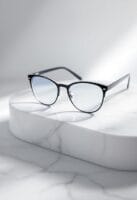
Hey there! Have you ever heard of edge distortion in photography? It’s a fascinating effect that happens when light rays come into a lens at angles that stray from the optical axis. Instead of coming together neatly, these rays can mess with the shapes in your picture, especially around the edges. Think about it like this: if you’ve ever used a wide-angle or fisheye lens, you might have noticed how certain images can look like they’re bending or curving. That’s edge distortion—sometimes showing up as barrel distortion or pincushion distortion.
This kind of distortion can really affect how we see and interpret an image. For instance, in landscape photography, those beautiful straight lines of a horizon can turn wavy if the lens isn’t designed well. Good news though! Lens makers are aware of this issue and often use special aspheric surfaces to help reduce edge distortion. This means your photos can be clearer and more true to life. Additionally, using lenses with HD lenses can improve image clarity by enhancing color restoration and overall visibility.
Recommended Products
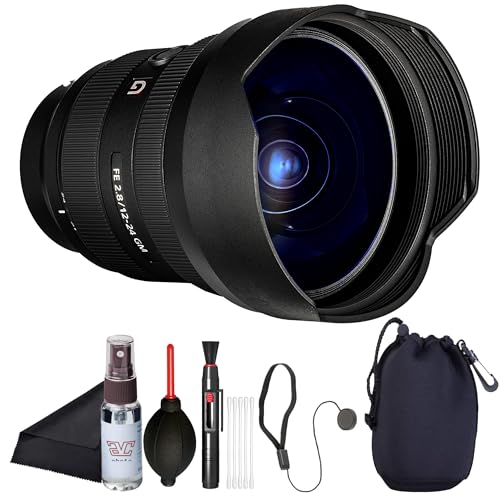
Sony USA Authorized. Sony FE 12–24mm f/2.8 GM Lens with lens pouch, cleaning kit, and lens cap keeper.

【Scene Adapt Engine】Enjoy higher-contrast visuals with our Scene Adapt Engine (SAE), the technology behind Dynamic Iris and Dynamic Laser Dimming. SAE produces deeper blacks and brighter highlights, for an impressive contrast ratio >30,000:1. This works by adjusting the laser output in real time, based on the content being displayed. SAE also lowers energy consumption by about 70%, combining environmental sustainability and impeccable image quality.

CREATIVE STILL AND VIDEO PHOTOGRAPHY THROUGH PRECISE MANUAL FOCUSING: The top-quality focusing mechanism moves smoothly without backlash, optimally supporting the photographer's creative interplay with the focal plane of high-speed fixed focal lengths.
Why Lens Curvature Matters for Your Glasses

Hey! Have you ever thought about how important lens curvature is when it comes to your glasses? It really affects how clearly you see everything. If you have a stronger prescription, you might notice that the edges of your lens can create a bit of distortion—like that quirky fishbowl effect. But don’t worry! Choosing high-index lenses can help with that, as they’re thinner and reduce that strange bending at the edges, making your vision a lot clearer.
And let’s talk about aspheric lenses for a moment. They’re designed to minimize those pesky optical aberrations that pop up at the edges, providing you with a better visual experience. Plus, when you pick smaller frames—ideally ones with eye sizes of 52mm or less—you can keep your pupils aligned perfectly with the optical center of the lens. This little detail can really enhance the sharpness of your vision. Many stylish eyewear options also incorporate UV protection and polarization to enhance visual comfort and safety.
Recommended Products
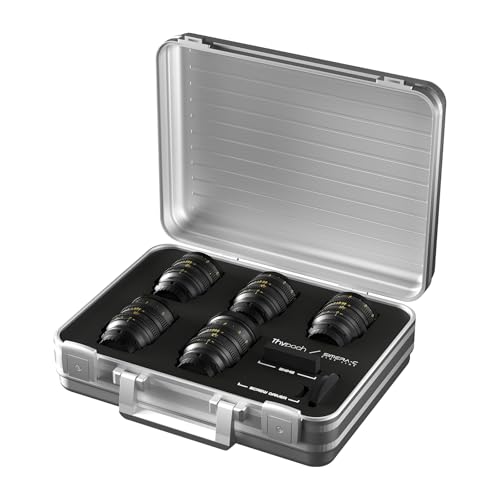
Thypoch Set of 5 full frame lenses Simera-C 21/28/35/50/75 mm T1.5 (M Mount)

Thypoch kit 5 lenses Simera-C 21/28/35/50/75mm T1.5 ( E mount)

Consists of eight lens in 5 groups
Types of Lenses Most Prone to Edge Distortion

You know, when it comes to photography, certain types of lenses are like drama queens—they’re particularly known for edge distortion! Take wide-angle lenses, for instance. They can create this wacky effect called barrel distortion, which bends straight lines into curves, especially around the edges of your shot. If you’ve ever taken a photo of a building with one, you might have noticed how those corners start to look more like a funhouse mirror!
Then there are fisheye lenses. These are the superstars of distortion—they give you that funky fishbowl look that warps everything in a mesmerizing way. Older telephoto lenses can also play tricks on your eyes; they sometimes cause pincushion distortion, where straight lines curve inward at the edges. Zoom lenses can be a mixed bag, showing varying degrees of both barrel and pincushion distortion, depending on which focal length you choose.
And don’t get me started on multifocal lenses! Their segmented design can lead to a bit of peripheral distortion, affecting sharpness in the outer parts of your image. Understanding these quirks is crucial. It helps you pick the right lens for your needs, especially if you’re going for a specific look or feel. Now, let’s chat about how to minimize these distortions when you’re out shooting! Additionally, choosing lenses with impact-resistant materials not only enhances durability but can also improve image clarity by maintaining lens integrity over time.
Recommended Products

Professional super-telephoto zoom with Nikon's first built-in selectable 1.4x teleconverter

High image quality and bright f/2.8 aperture zoom RF L lens

Tilt and shift lens compatible with all Canon EOS cameras; ultra wide 17mm focal length
Understanding the Effects of Peripheral Distortion on Clear Vision
Hey there! Have you ever wondered why your glasses make the world look a bit different, especially at the edges? That’s what we call peripheral distortion, and it can create that weird fishbowl effect where straight lines seem to bend or curve. This is something a lot of people experience, especially if they have higher prescriptions or wear larger frames, which can really amplify the distortion.
For example, imagine sitting in a car and looking out the window. Your glasses might make the ground appear oddly far away or give you that disorienting feeling you just can’t shake. That’s all part of the adjustment period that comes whenever you get new glasses, which can last anywhere from 3 to 7 days as your brain gets used to the new view.
If you’re looking to reduce that distortion, you might want to consider high-index lenses. They’re thinner and lighter, which can help minimize how much the lens distorts your view. So, even if it feels a bit overwhelming at first, give it some time. You’ll get used to your new glasses, and they might even help you see the world more clearly than before! Want to know more about how to choose the right lenses for your needs?
Also, choosing sunglasses with proper UV400 protection is important for maintaining clear and safe vision outdoors.
Effective Tips for Reducing Edge Distortion in Eyewear
You know that weird bending effect you sometimes see at the edges of your vision when you wear glasses? That’s called edge distortion, and luckily, there are some simple ways to tackle it so you can enjoy a clearer view. For starters, consider high-index lens materials. They are thinner and lighter, which helps to reduce distortion significantly.
Also, picking smaller frames—think 52mm or less—keeps your pupils aligned closer to the center of the lens. This alignment improves how well the lenses work, making everything look sharper. If you tend to notice distortion in your peripheral vision, try aspheric lenses. These are specially designed to minimize optical issues, giving you a clearer side view.
Lastly, don’t overlook the importance of a proper eyewear fitting. This simple step can dramatically increase your visual comfort by ensuring that your glasses sit just right on your face. So, with these adjustments, you can say goodbye to edge distortion and hello to better clarity in your everyday life! Plus, once your glasses fit right and provide clear vision, you might find that you enjoy wearing them even more. Additionally, choosing frames with flexible spring hinges can enhance comfort and promote a better fit, further reducing visual discomfort.
Recommended Products

QUALITY LENSES: Multicoated, Aspherical Eco-Glass eyepiece lenses offer flat field of view and enhanced image brightness in most lighting conditions.

QUALITY LENSES: Multicoated, Aspherical Eco-Glass eyepiece lenses offer flat field of view and enhanced image brightness in most lighting conditions.

90D Double Aspheric ens
Adapting to New Lenses: What You Should Know
Switching to new lenses can feel a bit like jumping on a roller coaster for the first time—it’s thrilling but can also leave you feeling a little out of sorts. Typically, this adjustment period lasts about 3 to 7 days, and during this time, you might notice some weird sensations, like a slight swimmy feeling or even discomfort. Think of it this way: your brain is learning to work with a new tool!
Wearing your new glasses consistently, especially in familiar places like your living room or at your favorite café, really helps your brain get used to the change. If you have strong prescriptions or larger frames, don’t be surprised if you notice some wobbly edges out of your peripheral vision; that’s pretty normal due to how the lenses are designed.
If that discomfort continues beyond a week, it may be time to check in with your eye care professional to reassess your prescription or the fit of your glasses. Regular eye exams are essential, too—they ensure that your lenses keep you seeing clearly and comfortably! So, as you adjust, think about how often you’re scheduling those eye check-ups!
Additionally, selecting lenses with anti-fog coatings can greatly improve your comfort by maintaining clarity during your adjustment period.
When to Consult Your Optometrist About Distortion Issues?
Hey there! So, adjusting to new lenses can be a bit tricky at times, especially when you’re dealing with distortion issues. If you find that you’re experiencing any weird peripheral distortion that sticks around longer than a week, it’s definitely time to chat with your optometrist. This might mean that your lenses aren’t fitting right, or perhaps your prescription needs a second look.
If you’re trying out multifocal lenses for the first time, there are some cool techniques that can help with your adjustment. For instance, practicing eye movements in a way that’s comfortable for you can make a big difference. And if you’ve got oversized frames, they can sometimes create those optical glitches we all want to avoid, so getting advice on the right frame size can really help out.
Oh, and don’t forget about your regular eye exams, especially if you have high myopia. These appointments are key for keeping an eye (no pun intended!) on distortion issues that might crop up as your prescription changes. Your vision should always be clear and comfortable, right? That’s something we all deserve! If you’re ever unsure, just ask your optometrist—they’re there to help you get the best vision possible! Also, selecting the appropriate frame style can significantly reduce peripheral distortion and improve your comfort with bifocal lenses.
Recommended Products

All Wiley X lenses block 400 nanometers or 100% of the suns harmful UV rays

Polarized Bifocal Sunglasses with Convenient Magnetic Neck-Hanging Design: These polarized bifocal sunglasses feature uniquely designed magnetic temple ends that connect behind the neck, allowing the glasses to hang comfortably when not in use. The long curved temples help keep them secure and reduce the chances of misplacing your everyday sun readers.

KEY FEATURES–Bifocal for close vision, Reading powers of x1.5, x2.0, and x2.5, Polarized lenses reduce glare, Impact-resistant polycarbonate (PC) lenses, Excellent optical clarity, Oleophobic lens coating repels saltwater, oil, and chemicals, Lightweight, flexible, and resilient Grilamid frames, Block 100% of the harmful UVA and UVB rays.
Frequently Asked Questions
What Causes Distortion in Peripheral Vision?
Distortion in peripheral vision arises from lens aberrations, curvature effects, and light refraction, affecting optical resolution. This leads to image displacement and altered visual perception, particularly in our gaze direction and eye alignment, reducing peripheral awareness.
What Causes Peripheral Distortion in Glasses?
Peripheral distortion in glasses stems from lens curvature effects, prescription strength variations, and frame shape influence. Material quality differences and fitting measurement accuracy amplify viewing angle deviations, while design optimization strategies minimize visual acuity impact and edge thickness considerations.
Why Is There Peripheral Distortion in Progressive Lenses?
Peripheral distortion in progressive lenses arises from lens curvature effects, prescription variations, and visual acuity differences. Fitting heights matter, along with material choices, as these affect our viewing angles and the distortion perception differences we experience.
Which Lens Design Has Unwanted Distortion in the Periphery of the Lens?
We can’t ignore that many lens types experience unwanted distortion, particularly those with significant lens curvature. Optical design flaws lead to edge effects, reducing image quality and visual acuity through various distortion types at the periphery.


